A workout plan for a busy schedule needs two layers: a small number of realistic main sessions and a shorter fallback for days when the original plan no longer fits. Schedule the week you can usually complete, protect recovery between demanding sessions and decide your 15- or 20-minute alternative before the difficult day arrives.
Plan around stable windows, not your perfect week
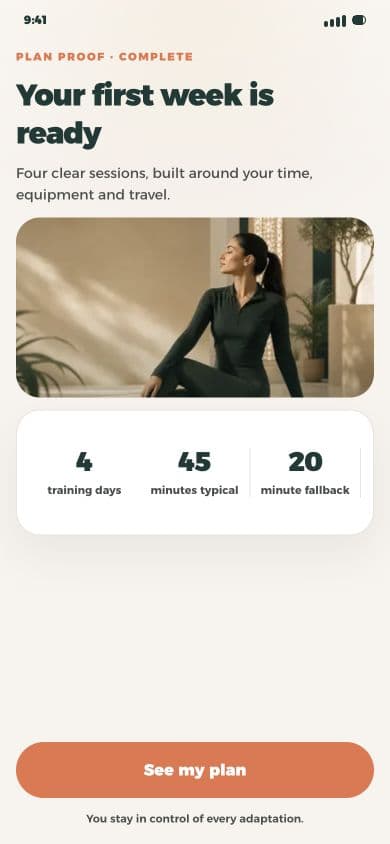
Choose the two to four training windows that survive most normal weeks. A session before work, at lunch or on a quieter weekend morning is more useful than a theoretically perfect slot you regularly lose.
Leave space between demanding sessions where possible. The goal is a repeatable rhythm, not packing every available hour with training.
Define a minimum useful session
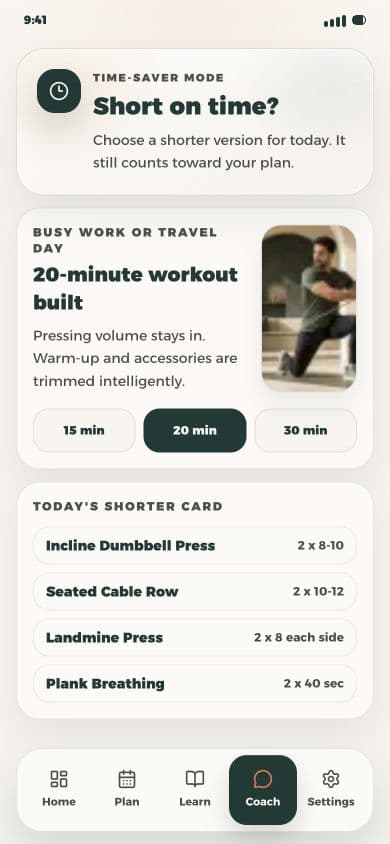
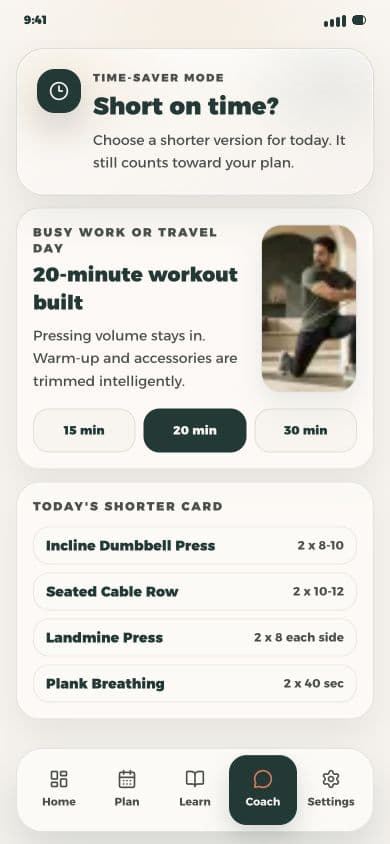
Your fallback should be decided in advance. For example: keep the main compound movements, reduce accessories and finish in twenty minutes. This removes the all-or-nothing decision when a meeting runs late.
A shorter workout should preserve the main intent of the day. Random intensity is not a substitute for intelligent trimming.
Use a simple priority order
When time changes, adjust the session in this order: preserve safety and technique, keep the main training purpose, reduce optional volume, then move or remove lower-priority work.
- Full session when the planned window is available.
- Shorter session when the day compresses.
- Home or travel-ready version when location changes.
- Recovery or a qualified opinion when pain or illness changes the decision.
Do not repay missed workouts with exhaustion
Missing one session does not require two hard workouts in one day. Continue with the next suitable session and preserve normal recovery. A plan stays useful when it helps you return, not when it punishes the disruption.
How 24/7 Fit handles a compressed day
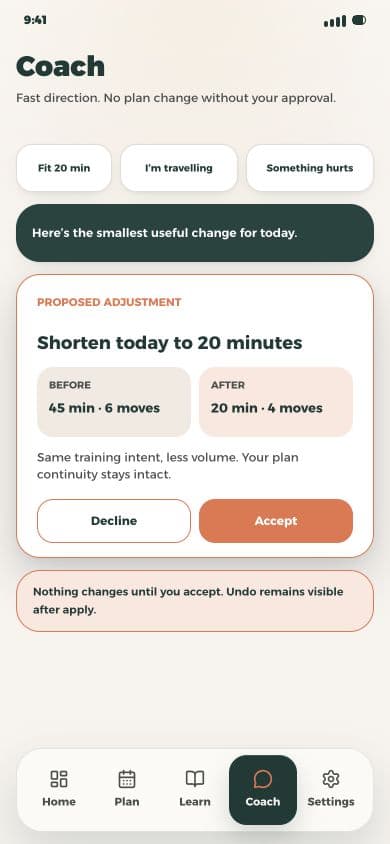
Time-Saver mode offers 15-, 20- or 30-minute alternatives linked to the planned session. Coach proposals show what changes before you accept them, so the rest of the programme does not silently change.
Build the main week conservatively, choose the fallback in advance and measure consistency by useful sessions completed—not by whether every week was perfect.
Common questions
How many workouts should a busy person schedule?
Schedule the number you can recover from and complete consistently. For many people that is a small number of well-placed sessions, but individual needs and circumstances vary.
Is a 20-minute workout worth doing?
A focused 20-minute session can be a useful fallback when it preserves the main purpose of the planned workout. It should not be treated as a punishment or random high-intensity replacement.
Should I double up after missing a workout?
Usually, resume with the next suitable session and keep normal recovery rather than forcing two demanding workouts together.
Sources and further reading
General training information only. Stop if you feel pain, seek medical advice for symptoms or injuries, and use a suitably qualified professional when you need assessment or hands-on coaching.